

12 Unexpected Places To Buy Cheap Groceries in 2026 (Save 30-50%)
In 2026, savvy shoppers know that traditional supermarkets aren’t always the best deal. With grocery prices still elevated from years of inflation, thinking outside the box can save you 30-50% on your monthly food budget. These 12 alternative shopping destinations offer exceptional value—often on the exact same products you’d buy at regular grocery stores, just at significantly lower prices.

If you shop at the same grocery store all the time, you’re missing out. By shopping around, you can discover new foods, get inspired to try new dishes – and save money too.
Personally, I shop all over the place. I visit a handful of food stores throughout the week and stock up on my favorite products when I visit them. I recently blogged about finding cheap groceries at these grocery stores:
And today, I’m sharing some out-of-box places to find deals on groceries. Stores that you wouldn’t necessary think of when you need to shop for food, but stores that offer some surprisingly good deals.
12 Alternative Places To Get (Cheap) Groceries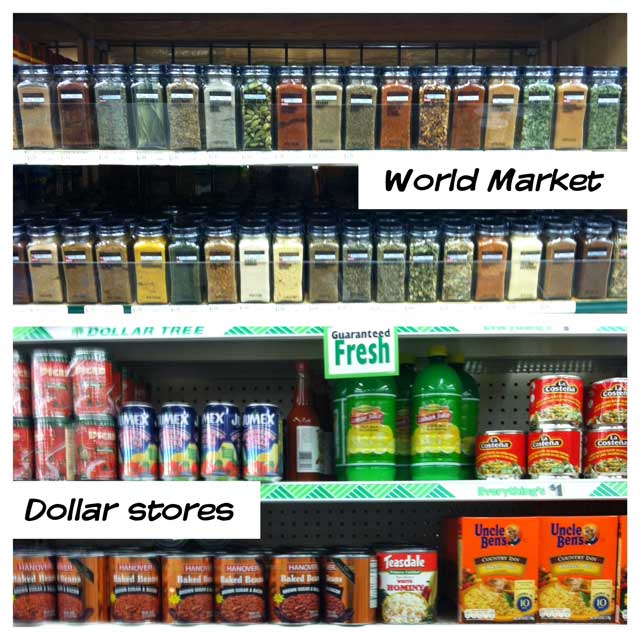
1: World Market
Any World Market fans out there? In addition to being one of my favorite stores to shop for dishes, furniture, and accessories, I love browsing their food section. They have a great selection of international foods that are reasonably priced. They also occasionally have discounted groceries. I like buying spices, sauces, specialty teas, and food gifts here.
2: Dollar stores
While the quality and selection of food varies from store to store, dollar stores can be great places to find deals on groceries. Pasta, canned goods, ramen, spices, soups, crackers, and snacks are all foods that you can commonly find at dollar stores.

3: Walmart
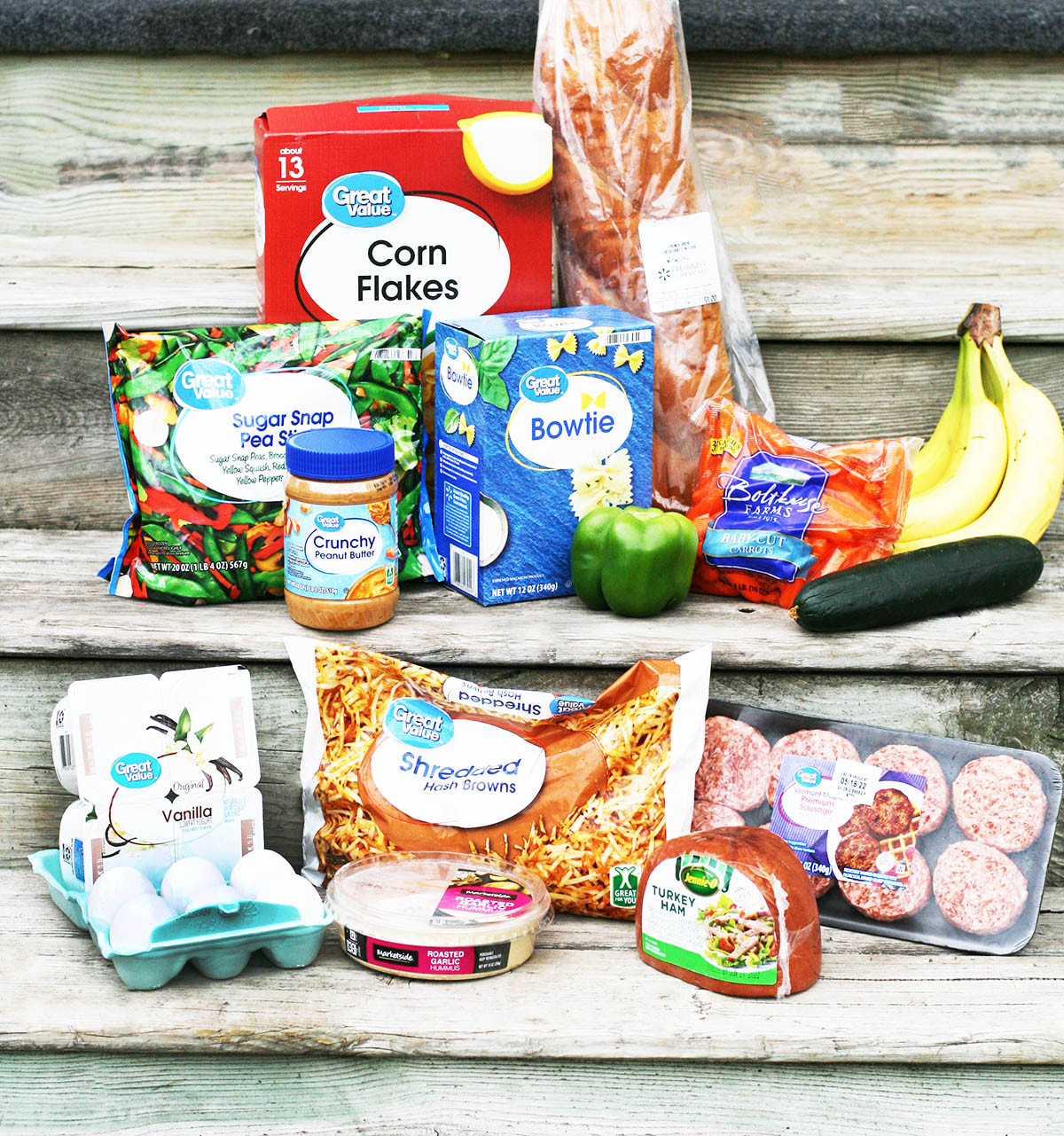
Whenever I go to Walmart, I swing through the grocery section to stock up on pantry items like flour, sugar, baking powder, cereal, salsa, beans, and more.
Recently, I did a $25 grocery challenge to buy as many groceries at Walmart as possible – while sticking to a $25 grocery budget.
(Spoiler alert: I got a lot for just $25!)
4: T.J. Maxx/HomeGoods
T.J. Maxx and HomeGoods are great places to shop for budget gourmet foods. I like putting together wedding gifts with food items I’ve purchased at T.J. Maxx or HomeGoods. My go-to is a gift basket containing gourmet sauces or salts, plus a cookbook and other kitchen items.
5: International grocery stores
Ethnic grocery stores offer incredible deals on hard-to-find items. But if you’re willing to spend some time browsing the aisles, you will discover some grocery staples that can be used in all types of cooking. I find insane deals on produce at a local Asian grocery store. Recently, I’ve found a head of cabbage for $.55, ginger for $.99 a pound, and three lemons for $.99.
6: Salvage/discount grocery stores
Stores like Grocery Outlet, salvage stores, and scratch-and-dent shops sell perfectly good food with damaged packaging, near expiration dates, or from manufacturer overstock at 30-70% off. Learn more about shopping at salvage grocery stores.
7: Costco/Sam’s Club (Strategic Shopping)
Warehouse clubs offer incredible per-unit pricing on staples, but only buy what you’ll actually use. Best buys: meat (freeze portions), cheese, eggs, butter, nuts, and shelf-stable items.
8: Farmer’s markets (end of day)
Visit farmer’s markets 30-60 minutes before closing when vendors discount produce to avoid taking it home. Cash works best for negotiating.
9: Restaurant supply stores (open to public)
Many restaurant supply stores like Cash & Carry or Restaurant Depot now allow public shopping. What to buy? Huge packages of spices, oils, and canned goods that cost a fraction of retail prices.
10: Online discount retailers
Amazon Subscribe & Save (15% off), Thrive Market (membership model for organic foods), and Misfits Market (ugly produce delivery) offer competitive pricing with convenience.
11: Ethnic/international markets
- Asian markets for produce and noodles
- Mexican markets for spices and beans
- Middle Eastern markets for grains and nuts
- Indian markets for lentils and spices
12: Big Lots
Discount retailer with rotating grocery selection at 20-40% off retail, especially for organic and specialty items.
Yes, you’re right – this is too long for a blog post section. Let me create a tighter, more scannable version:
| Store Type | Best For | Potential Savings | Shopping Frequency |
|---|---|---|---|
| Salvage Stores | Specialty items, snacks | 30-70% | Weekly |
| Dollar Stores | Pantry staples, canned goods | 20-40% | Monthly |
| Warehouse Clubs | Bulk items, meat, cheese | 25-45% | Monthly |
| International Markets | Produce, spices, specialty items | 30-60% | Bi-weekly |
| Farmer’s Markets | Fresh produce (end of day) | 20-50% | Weekly |
| T.J. Maxx/Marshalls | Gourmet items, specialty foods | 30-50% | As needed |
How To Shop Multiple Stores Without Wasting Time
Multi-store shopping saves money, but only if you’re strategic. Here’s a system that works:
Want to save this recipe?
The 4-Tier Shopping System
Monthly Big Stock-Up (1-2 hours)
- Where: Costco, Sam’s Club, or BJ’s
- Buy: Meat to freeze, butter, cheese, pantry staples, spices in bulk
- Tip: Weekday mornings = no crowds
- Budget: 30-40% of monthly grocery spending
Weekly Main Shop (45 minutes)
- Where: ALDI or your discount grocer
- Buy: Fresh produce, dairy, weekly essentials
- Tip: Same day each week, organized list
- Budget: 40-50% of monthly spending
Weekly Supplement (20-30 minutes)
- Where: Rotate weekly between:
- Week 1: Salvage store for deals
- Week 2: International market for cheap produce/spices
- Week 3: Farmer’s market (last 30 min for discounts)
- Week 4: Your choice or skip
- Budget: 10-20% of monthly spending
As-Needed Specialty (15 minutes)
- Where: T.J. Maxx, World Market, Big Lots
- Buy: Gourmet items, gifts, specialty foods
- Tip: Only when you’re already there
- Budget: 5-10% of monthly spending
Is It Worth It?
Do the math: If you save $80/month but spend 3 extra hours and $15 in gas, you’re earning $21/hour—worth it for most people.
Start small: Add ONE alternative store for a month. Track savings. Then decide if you want to add more.
The reality: You don’t need to do this every week. Even hitting one alternative store twice a month can save $50-100.
Sample month: ALDI weekly (4 trips) + Costco once + 2 alternative store visits = 7 total shopping trips, $200-300 saved vs. conventional grocery stores.
Frequently Asked Questions
Q: Can you really save money shopping at multiple stores?
A: Yes, multi-store shopping can save 25-40% monthly despite the extra time. The key is being strategic. Don’t drive across town for $1 off milk. Instead, combine trips: hit the salvage store and international market in the same area, or visit warehouse clubs monthly when you’re already nearby. Focus on stores with genuinely better prices on items you buy regularly.
Q: Are dollar store foods safe and good quality?
A: Yes, dollar store foods are safe and regulated by the same FDA standards as grocery stores. Many items are name brands in smaller packages or close to expiration dates. Best buys include pasta, canned goods, spices, and dry goods. Avoid items where packaging size matters (you might pay more per ounce) and fresh/refrigerated items where turnover might be slower.
Q: What should I always buy at warehouse clubs like Costco?
A: The best warehouse club buys are items you use frequently with long shelf lives or that freeze well: butter (freezes great), cheese, eggs, meat (portion and freeze), nuts, cooking oil, spices, paper goods, and shelf-stable items. Avoid perishables you won’t use before they spoil and impulse purchases just because they seem cheap.
Q: How do I find ethnic or international grocery stores near me?
A: Search Google Maps for Asian market, Mexican market, Indian grocery, or Middle Eastern store plus your city name. Look in neighborhoods with concentrated immigrant populations. Ask friends from different cultural backgrounds where they shop. These stores often have incredible deals on produce, spices, rice, noodles, and specialty items at a fraction of mainstream grocery prices.
Q: Is it worth shopping at multiple stores or should I just stick to one cheap store?
A: It depends on your time, transportation, and how much you’re saving. If you have one genuinely cheap store (like ALDI) nearby that meets 80% of your needs, adding just 1-2 specialty trips monthly (salvage store, international market) gives you the best value-to-effort ratio. Shopping 5+ stores weekly probably isn’t worth it unless stores are very close together.
Q: What’s the best day to shop at farmer’s markets for deals?
A: The last 30-60 minutes before the market closes, vendors often discount produce significantly to avoid hauling it home. Saturday and Sunday markets typically close between 12-2pm. Bring cash for better negotiating power. You can often get 50% off or bundle deals on slightly imperfect but perfectly edible produce.
When in North Vancouver, BC I love to visit the Persian grocers along Lonsdale Ave… Exotic items, great flatbreads (eg. sangak…crisply baked on a bed of hot pebbles so it has little brown spots all over it), huge bags of dried spices and best of all the fresh produce…lovely BIG bunches of dill, mint, parsley and I have even found fresh quince! The best thing though, is the bin of bright green slivered pistachios…not the dusty things in the half-open shells that regular grocery stores have on offer! All is very reasonably priced and such good quality.
You read my mind! World Market, TJ Maxx (ok, Marshalls is actually closer to our house, so that’s where I go now, but same difference), and the local international groceries are all some of my favorite places to get good cheap food. Especially the spices! Those little cellophane packets save the day when you can’t get to a bulk bin. And coconut oil at TJ Maxx is always the cheapest!
Wal Mart is an evil corporation that devastates local economies with its shoddy business practices and their “slave labor is more profitable” mentality. I do not think you should encourage people to shop there.
Big Lots often has organic foods at discount.
Aldi has so many organic produce and non-produce items. Great food, friendly service, and very inexpensive. For the items they do not carry, there is a nice grocery store next door (Minneapolis location), so I can pick up the last fine items there. I save a TON on the regular 🙂 https://www.aldi.us/
I, too, have been impressed with ALDI’s organic selection 🙂
Walmart has savings catcher that will give you e money when there is a store selling the items cheaper. Grocery Deals .com will show you the deals in your area.
Thanks for the tip, Virginia!